Gut Health for Men: Fix Your Digestion to Boost Energy and Burn Fat Faster
You are eating reasonably well. You are training when you can. You are sleeping, sort of. But you still feel tired by noon, your belly is not shifting despite your effort, and some days your brain feels like it is running through wet concrete. Most men blame stress, age, or a bad week. The real answer, backed by a growing body of research, is often sitting in your gut.
Gut health for men is not a wellness trend invented for Instagram. It is one of the most significant, and most consistently overlooked, levers for energy, body composition, hormone balance, and mental performance. If you have never seriously considered your gut as a performance factor, this article is going to change the way you think about your body.
What Is the Gut Microbiome and Why Should Men Care?
Your gut is home to over 100 trillion bacteria collectively known as your gut microbiome. More than 70% of your immune system resides in your gut, and roughly 90% of all serotonin, an important neurotransmitter that supports mood and sleep, is synthesised there.
That means your gut is not just a digestive organ. It is a hormonal factory, an immune hub, a mood regulator, and a direct influencer of your energy levels and metabolic rate. Your gut influences your mood, energy, metabolism, immunity, and even testosterone. When it is healthy, you perform at your best. When it is out of balance, it holds you back.
For men in their 30s and 40s carrying career pressure, family responsibilities, and the slow creep of lifestyle-related health decline, this matters enormously.
The Signs Your Gut Is Quietly Sabotaging You
Most men dismiss these symptoms as normal, they are not.
Common signs of poor gut health in men include persistent bloating especially after meals, fatigue even after a full night of sleep, mood changes such as increased irritability and low motivation, skin issues like acne and redness, and frequent illness.
Beyond the physical discomfort, poor gut health can slow metabolism and increase cravings, two factors that make fat loss feel nearly impossible no matter how disciplined you are. If any of these sound familiar, your gut, not your willpower, may be the problem.
How Poor Gut Health Kills Your Energy
Here is the mechanism most men never hear about.
When your gut microbiome is out of balance, your body struggles to absorb nutrients properly, experiences increased inflammation, and suffers blood sugar crashes, leaving you feeling tired and foggy.
Your gut produces much of your body’s serotonin, and two 2023 reports by the National Institutes of Health directly connect gut microbiome disruptions with chronic fatigue syndrome.
Additionally, poor nutrient absorption, especially of iron, B12, and magnesium, leads to persistent fatigue. These are the exact micronutrients that fuel energy production at the cellular level. No supplement will compensate effectively if your gut cannot absorb nutrients in the first place.
The Gut-Fat Loss Connection: Why Your Belly Won't Budge
This is the piece that changes everything for most men.
Your gut microbiome plays a pivotal role in weight maintenance because its many different bacterial species produce chemicals that control how food is digested. Some bacteria produce chemicals that give you a sense of fullness, so you eat less. Others make inflammatory chemicals that can cause weight gain.
Certain bacteria help your body burn fat better, while others are linked to more cravings, weight gain, and insulin resistance. If your gut is out of balance, losing weight becomes much harder regardless of how much you train.
In short: you can out-train and out-diet a bad gut only so far. Eventually, the microbiome wins.
Gut Health and Testosterone: The Connection Men Ignore
Here is where it gets particularly important for men over 30.
Men naturally lose about 1% of testosterone yearly after the age of 30, and gut imbalances can speed up this decline.
Imbalance or dysbiosis in the gut microbiome can cause different health issues in men, including reproductive and sexual health issues associated with testosterone levels. A 2025 systematic review confirmed a significant positive correlation between a diverse, healthy gut microbiome and testosterone levels in men.
Ongoing gut inflammation and trouble absorbing nutrients can interfere with the production of important hormones like testosterone, with some gut bacteria also affecting the enzymes that help process hormones.
Zinc, magnesium, and Vitamin D, all critical for testosterone production, are dependent on a healthy gut for proper absorption. Fix the gut, and you create the internal environment your hormones need to function optimally.
6 Practical Ways to Fix Your Gut and Perform Better
1. Eat More Fibre – Every Single Day
Most men consume far less fibre than recommended. Fibre feeds the beneficial bacteria in your gut and promotes microbial diversity. Aim for 30+ grams daily from sources like oats, lentils, rajma, vegetables, and whole fruits, not supplements.
2. Add Fermented Foods to Your Diet
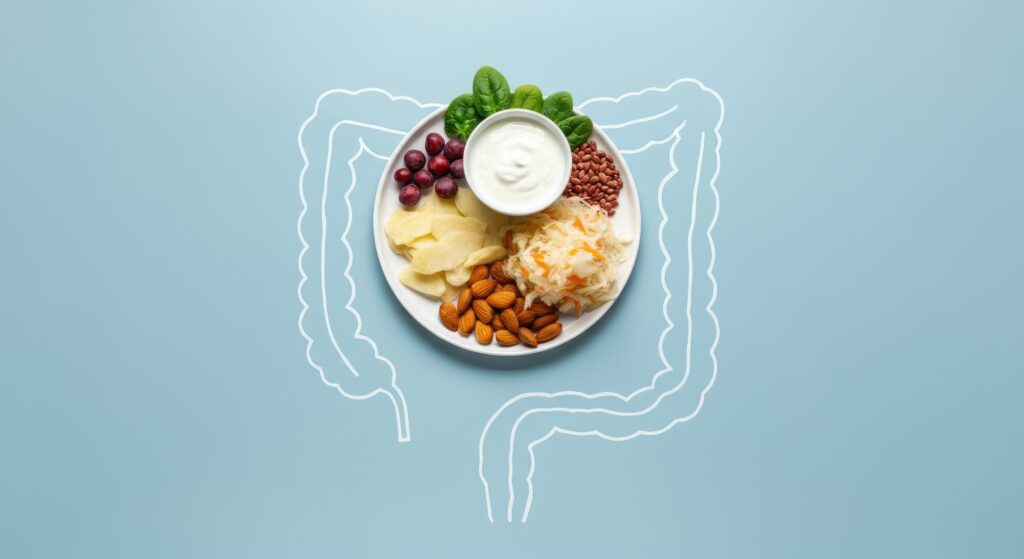
Curd, kefir, kimchi, and unsweetened yogurt deliver live probiotic bacteria directly to your gut. It is best to eat probiotic-rich foods rather than rely on supplements, good options include plain yogurt, kimchi, kefir, and sauerkraut. Even one serving daily makes a measurable difference over time.
3. Cut the Gut Wreckers
Excess alcohol, ultra-processed snack foods, refined sugar, and antibiotic overuse are among the biggest destroyers of gut microbial diversity. You do not need to be perfect, but reducing these consistently is non-negotiable for gut recovery.
4. Manage Stress Actively
A disrupted gut microbiome can trigger low-grade systemic inflammation that affects nearly every organ system including the brain, with inflammatory molecules crossing the blood-brain barrier and influencing how neurons communicate. Chronic stress accelerates this cycle. Exercise, structured breathing, and adequate sleep are your most powerful anti-stress tools, and all three directly benefit your gut.
5. Exercise Regularly
Physical activity increases gut microbiome diversity, a key marker of gut health. Even 30 minutes of moderate exercise five times a week has been shown to positively shift microbial composition. As a dad and a man in his prime, movement is not optional.
6. Prioritise Sleep
Sleep, exercise, and probiotics are some of the easiest ways to take care of your gut. Poor sleep disrupts the gut-brain axis, increases cortisol, and promotes the exact microbial imbalances that lead to cravings, fat storage, and low energy. Seven to nine hours is not a luxury, it is gut medicine.
6 Practical Ways to Fix Your Gut and Perform Better
1. Eat More Fibre – Every Single Day
Most men consume far less fibre than recommended. Fibre feeds the beneficial bacteria in your gut and promotes microbial diversity. Aim for 30+ grams daily from sources like oats, lentils, rajma, vegetables, and whole fruits, not supplements.
2. Add Fermented Foods to Your Diet
Curd, kefir, kimchi, and unsweetened yogurt deliver live probiotic bacteria directly to your gut. It is best to eat probiotic-rich foods rather than rely on supplements, good options include plain yogurt, kimchi, kefir, and sauerkraut. Even one serving daily makes a measurable difference over time.
3. Cut the Gut Wreckers
Excess alcohol, ultra-processed snack foods, refined sugar, and antibiotic overuse are among the biggest destroyers of gut microbial diversity. You do not need to be perfect, but reducing these consistently is non-negotiable for gut recovery.
4. Manage Stress Actively
A disrupted gut microbiome can trigger low-grade systemic inflammation that affects nearly every organ system including the brain, with inflammatory molecules crossing the blood-brain barrier and influencing how neurons communicate. Chronic stress accelerates this cycle. Exercise, structured breathing, and adequate sleep are your most powerful anti-stress tools, and all three directly benefit your gut.
5. Exercise Regularly
Physical activity increases gut microbiome diversity, a key marker of gut health. Even 30 minutes of moderate exercise five times a week has been shown to positively shift microbial composition. As a dad and a man in his prime, movement is not optional.
6. Prioritise Sleep
Sleep, exercise, and probiotics are some of the easiest ways to take care of your gut. Poor sleep disrupts the gut-brain axis, increases cortisol, and promotes the exact microbial imbalances that lead to cravings, fat storage, and low energy. Seven to nine hours is not a luxury, it is gut medicine.
Conclusion: Fix the Gut, Fix Everything Else
If your energy is low, your fat loss has stalled, and you feel older than you should, your gut is the conversation your body has been trying to start. Gut health for men is not a niche topic. It is the foundation of metabolic performance, hormonal balance, and physical resilience for men in their 25–45 prime years.
The changes required are not dramatic. More fibre, fermented foods, less junk, better sleep, regular movement, applied consistently, these shifts rewire your gut and, by extension, your energy, body composition, and drive. Start with one change this week. Your gut, and your family, will thank you.
Frequently Asked Questions
1. What are the signs of poor gut health in men? The most common signs include persistent bloating, fatigue even after sleeping well, brain fog, low mood, unexplained weight gain or difficulty losing fat, frequent colds, skin problems like acne, and irregular digestion. Many men mistake these for stress or ageing when the gut is often the root cause.
2. How does gut health affect fat loss in men? An imbalanced gut microbiome disrupts the hormones and chemicals that regulate appetite and metabolism. Certain bacteria promote fat storage and cravings, while others support fat burning and insulin sensitivity. Without a healthy gut, fat loss is significantly harder regardless of diet or exercise effort.
3. Can poor gut health lower testosterone in men? Yes. Research shows a significant positive correlation between gut microbiome diversity and testosterone levels in men. A disrupted gut impairs absorption of key testosterone-supporting nutrients like zinc, magnesium, and Vitamin D, and can accelerate the natural testosterone decline men experience after 30.
4. How long does it take to improve gut health naturally? Most men begin to notice improvements in energy, bloating, and mood within 3–6 weeks of consistent dietary and lifestyle changes. Meaningful shifts in gut microbiome composition typically take 8–12 weeks of sustained healthy habits.
5. What foods are best for men’s gut health? Top gut-supporting foods include curd and plain yogurt (probiotics), oats and lentils (prebiotic fibre), garlic and onion (prebiotic compounds), fatty fish (omega-3s that reduce gut inflammation), colourful vegetables, and whole grains. Reducing alcohol, ultra-processed food, and excess sugar is equally important.
6. Is bloating after meals always a sign of poor gut health? Occasional bloating after a particularly large meal is normal. Persistent or daily bloating, especially after ordinary meals, is a consistent signal of gut imbalance, often linked to dysbiosis, food intolerances, or low digestive enzyme production. If it is ongoing, it warrants attention.
7. Can exercise improve gut health for men? Absolutely. Regular physical activity, even moderate aerobic exercise, has been shown to increase gut microbial diversity, reduce gut inflammation, and support the gut-brain axis. Men who exercise consistently tend to have significantly healthier, more diverse gut microbiomes than sedentary individuals.