Fatty Liver in Men: Risks Even at Normal Weight
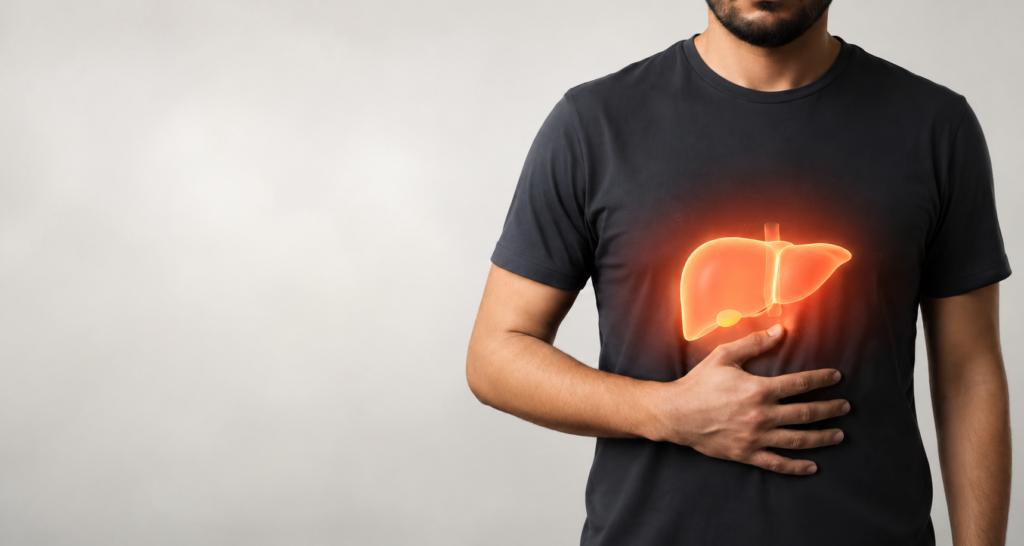
You eat reasonably well. You hit the gym three times a week. Your weighing scale says you’re fine. So why would your doctor mention the words “fatty liver” during your last checkup?
Here’s the uncomfortable truth: fatty liver disease in men is no longer a condition reserved for people who are overweight or drink heavily. It’s quietly showing up in slim, active, health-conscious men in their late 20s to mid-40s, the exact demographic that assumes it’s “not at risk.” Doctors have a name for this: lean NAFLD, and in India, it’s becoming disturbingly common.
This isn’t a scare tactic. It’s a wake-up call grounded in data, and one every FitDad who cares about being around for his kids needs to read carefully.
What Is Fatty Liver Disease, Really?
Fatty liver disease, now more precisely called MASLD (Metabolic dysfunction-Associated Steatotic Liver Disease), formerly known as NAFLD, happens when fat builds up inside liver cells, not because of alcohol, but because of how your body processes energy, sugar, and fat.
Left unchecked, it can progress through stages:
- Simple fatty liver (steatosis): Fat accumulates, often with zero symptoms
- Steatohepatitis (MASH): Inflammation sets in, liver cells start getting damaged
- Fibrosis: Scar tissue begins replacing healthy liver tissue
- Cirrhosis: Severe, often irreversible liver damage
The scary part? Stages one and two usually feel like nothing at all. Most men find out only when a routine blood test or ultrasound flags it, or worse, once symptoms like fatigue, abdominal discomfort, or jaundice show up years later.
Why "Normal Weight" Doesn't Mean Safe
This is where most men switch off, “I’m not overweight, so this doesn’t apply to me.” Unfortunately, the research says otherwise.
A large multicenter Indian study on fatty liver disease found that lean patients, those with a BMI between 18.5 and 22.9, make up a meaningful share of NAFLD cases, challenging the assumption that liver fat is purely a weight problem. Researchers point to a specific reason: Indian and South Asian bodies tend to store more visceral fat (fat around organs) and show higher insulin resistance even at a “normal” BMI, compared to Western populations, where waist size and weight climb together.
In other words, the number on your scale can lie. What matters more is where your fat is stored, not how much of it there is.
The India-Specific Reality
The numbers here are hard to ignore:
- A national systematic review estimated that roughly 38.6% of Indian adults live with fatty liver disease, with prevalence even higher in high-risk groups like those with obesity or diabetes.
- Regional studies place overall prevalence anywhere between 16% and 32% of the population, translating to well over 100 million Indians.
- Some coastal South Indian population studies have recorded fatty liver rates approaching half the adult population screened.
- Occupational health screenings among India’s IT workforce, a group known for long sedentary hours and high work stress, have specifically flagged lean fatty liver as a significant and often-missed finding.
If you work a desk job, sit through long commutes, and treat the gym as your only “movement” for the day, you fit the exact profile researchers are worried about.
The Hidden Drivers Behind Fatty Liver in Fit-Looking Men
Fatty liver rarely has one single cause. It’s usually a slow buildup of everyday habits that don’t individually seem dangerous.
1. Visceral Fat You Can’t See in the Mirror
You can have visible abs and still carry excess fat wrapped around your liver, pancreas, and intestines. This “invisible fat” is metabolically active and directly linked to insulin resistance, a key driver of liver fat accumulation.
2. Refined Carbs and Added Sugar
Sugary beverages, white rice in excess, packaged snacks, and refined flour spike insulin repeatedly through the day. Over time, your liver converts this excess glucose into fat and stores it, right where it shouldn’t be.
3. Poor Sleep and Chronic Stress
Late nights, irregular sleep, and the constant low hum of work-and-parenting stress raise cortisol levels, which independently worsens insulin resistance, one more pathway toward liver fat, regardless of what the scale shows.
4. Alcohol – Even “Moderate” Drinking
You don’t need to be a heavy drinker for alcohol to matter. Combined with a sedentary lifestyle and poor diet, even regular moderate drinking adds metabolic strain your liver has to absorb.
5. Genetics You Didn’t Choose
Certain gene variants, more common in specific Indian population subgroups, are linked to higher liver fat accumulation and faster disease progression, independent of body weight. You can’t control your genes, but knowing your family history helps you act earlier.
Symptoms Most Men Miss (Because There Usually Aren't Any)
This is the part that makes fatty liver genuinely dangerous: early-stage disease is almost always silent. When symptoms do appear, they’re vague enough to be brushed off as “just being tired”:
- Persistent fatigue or low energy, even after adequate sleep
- Mild, dull discomfort in the upper right abdomen
- Unexplained bloating
- Slight, unexplained weight fluctuation
- Skin changes or a subtle yellow tinge in more advanced cases
Because these signs mimic everyday tiredness or stress, most men only discover fatty liver through a routine blood test (elevated liver enzymes) or an abdominal ultrasound — often ordered for a completely unrelated reason.
What You Can Actually Do About It
The genuinely good news: fatty liver disease, especially in its early stages, is one of the most reversible chronic conditions when caught in time. Here’s where to start.
Get Screened, Don’t Guess
If you’re 25+, sit most of the day, or have a family history of diabetes or liver issues, ask your doctor for a liver function test (LFT) and an abdominal ultrasound at your next checkup, regardless of how fit you look.
Prioritize Movement Over “Workouts”
Structured gym sessions matter, but so does non-exercise movement throughout the day. Long uninterrupted sitting is independently linked to worse metabolic markers, even in men who work out regularly.
Rethink Your Plate, Not Just Your Portions
- Cut back on sugary drinks and refined carbs, this matters more than total calories for liver fat specifically
- Build meals around fiber, lean protein, and healthy fats
- If you eat a largely vegetarian diet, focus on combining pulses, dairy, and whole grains to hit adequate protein, a common gap in Indian diets that can worsen metabolic health
Treat Sleep as Non-Negotiable
Aim for consistent, adequate sleep. This isn’t a lifestyle luxury, it’s a direct lever on insulin sensitivity and liver fat metabolism.
Rethink Your Relationship With Alcohol
Even without a formal diagnosis, reducing frequency and quantity gives your liver real, measurable relief.
Why This Matters Especially for Dads
Fatty liver disease develops silently over years, which is exactly the window most men in their 30s and 40s are busy building careers and raising young kids, with little bandwidth left for their own health. But this is precisely the stage where small, consistent changes compound into decades of better health, for you, and for the family counting on you to be around, active, and energetic.
Being a present father isn’t just about showing up emotionally. It’s also about having the energy to play, the health to age well, and the discipline to model good habits for your kids before they form their own.
Conclusion: Don't Let "Looking Fine" Fool You
Fatty liver disease in men is no longer a condition you can rule out just because you’re not overweight. With a significant share of Indian men developing this condition at a normal BMI, the smartest move isn’t assuming you’re safe, it’s getting checked, understanding your personal risk factors, and making sustainable changes before symptoms force your hand.
Your liver doesn’t complain loudly until it’s overwhelmed. Don’t wait for it to.
Frequently Asked Questions
Can you have fatty liver disease even if you’re not overweight? Yes. This is known as lean NAFLD/MASLD, and it’s particularly common in South Asian populations, where visceral fat and insulin resistance can be elevated even at a normal BMI.
What are the earliest warning signs of fatty liver disease? Most early-stage cases have no noticeable symptoms. When present, signs can include persistent fatigue, mild upper-right abdominal discomfort, and bloating, often mistaken for everyday tiredness.
Is fatty liver disease reversible? In its early stages (simple steatosis), fatty liver is often reversible through sustained diet changes, regular movement, better sleep, and reduced alcohol intake. Later stages like fibrosis require closer medical management.
How is fatty liver disease diagnosed? Typically through a blood test (liver function test) showing elevated liver enzymes, followed by an abdominal ultrasound or a more specific test like FibroScan for confirmation and staging.
Does fatty liver disease only happen from drinking alcohol? No. Non-alcoholic fatty liver disease (MASLD) develops independently of alcohol use, driven mainly by insulin resistance, visceral fat, diet, and genetics. Alcohol can worsen it but isn’t the root cause in most cases.
At what age should men start getting screened for fatty liver? Given rising rates in India even among younger adults, men from age 25–30 onward, especially with a sedentary job, family history of diabetes, or high visceral fat, should consider routine liver screening as part of an annual health checkup.